Saturday, May 18, 2013

Yanchorman


It's early in the season yet, but stoic and undersung right-hander Hiroki Kuroda (6-2, 1.99) hasn't just become the Yankees ace, he might just be the best pitcher in baseball. As of this minute anyway, since the Red Sox Clay Buchholz (6-0, 1.78) has dropped from spectacular to merely great.

It didn't take long in 2013 for Kuroda to surpass both Andy Pettitte and CC Sabathia as the Yankees dominant stopper. After his first start of the season, when he was lifted as a precaution when a ball hit off his finger, Kuroda has put the Yankees in a position to win his next 8 starts. His only loss was when the Yankees were shut out 2-0, at Coors Field of all places.

Nobody trumpets Kuroda because he is so methodical, but the inside numbers have been brilliant:

> In 58.2 Innings, he's given up 42 hits and 14 walks, putting his WHIP at 0.95 (5th in AL).

> Of the 42 hits allowed, there have been just 3 HR and 10 2B. So opponents are hitting just .201 and slugging at an anemic .292 (2nd in AL).

> And he has allowed Zero Stolen Bases, very rare for an RHP with 9 starts. That must be a concentrated area of improvement since he allowed 17 last season.

In the last 35 years, only one Yankee (Roger Clemens, 2001) has won the AL Cy Young award. And in the last 20 years, only one pitcher (Justin Verlander, 2011) has won the AL MVP.

With Kuroda anchoring the Yankees unimaginable 26-16 start, he should certainly be in the running for both awards. Though he'll likely have to beat out his own teammate, Mariano Rivera, to get them.

I know it's still early, but I am inspired to make wild predictions everytime I watch Kuroda pitch.

Friday, May 17, 2013

Backtime Flicktime: Star Trek's Alternate Reality


***CAUTION - SPOILERS (A LOT OF THEM)***

The new Star Trek franchise is dynamic to say the least. The redirection of Federation history is something that will spin your mind like a top, especially if the story was ingrained in your head since you were a kid, but the characters are first rate and the action sequences are spectacular.

You almost have to shake your head and marvel at how authentic the performances are of Kirk, Spock and McCoy. The film starts with Spock quoting regulations and Kirk defying the Prime Directive - just like old times. 

Lt. Uhura is also far more developed, and Scotty, Sulu and Chekov are all outstanding as well. It's an all-star ensemble that leaves you wanting the next incarnation.

It's fashionable in Hollywood these days, to "reboot" iconic franchises and twist around the events and the character's motivations like in Batman Begins, Hannibal, and the very enticing preview for Man Of Steel. But the premise of this Star Trek pattern is a completely different course.

As opposed to Star Trek IV: The Voyage Home, and the classic Star Trek: First Contact, the Enterprise didn't save the time-space continuum. In the 2009 Star Trek, a Romulan ship emerges from the future, destroys the 4 billion inhabitants of the planet Vulcan, and changes the timeline of mankind.

And it changes Star Fleet's mission from "to seek out new life and new civilizations," to creating a fleet of war ships. Instead of an outstretched handshake, the Federation's extended hand holds a phaser instead. Hence, Star Trek Into Darkness. 

Had humanity not been so threatened by the actions of Captain Nero in the previous film, Admiral Marcus wouldn't have had to reanimate the 21st century arch-criminal Khan (as Star Fleet Officer John Harrison) as the brains behind the Federation's advanced new weaponry.

Kirk is charged with the mission of seeking out Harrison on Kronos (the Klingon home planet) from the edge of the Neutral Zone, and raining Star Fleet's newest torpedoes on him, thereby obliterating him. It's the 2259 equivalent of a drone strike. Though Spock convinces Kirk that Harrison must be brought back to earth and tried for his crimes - the 2259 equivalent of due process.

This creates a new enemy, the Federation war machine. And while Harrison helps the Enterprise ward off destruction, he proves to be the super-human and duplicitous Khan, a great guest-starring role by Benedict Cumberbatch. Though not as entertaining as Ricardo Montalban's 1982 performance, it is every bit as powerful.

And in an incredible turn on the Khan story, it is Kirk disabling Scotty (rather than Spock incapacitating McCoy), sacrificing his life and saving the ship amidst deadly radiation levels in the ship's engineering core. Kirk dies on the opposite side of the glass from Spock, the mirror image from Star Trek II. And it's Spock that screams KHAN!!!!!

And we had every reason to think Kirk was dead until McCoy found Khan's blood in a Tribble on his desk. After Khan's capture, his genetically-engineered blood is used to resurrect Kirk. So the universe is saved and the Enterprise crew is intact, which now includes Dr. Carol Marcus, the mother of Kirk's son in the previous story.

So the Star Trek storyline is altered under JJ Abrams's command, but in a good way. Despite being Federation General Order #1, The Prime Directive has always been side-stepped by the likes of Kirk, Picard, et al. So Abrams simply fits that mold.

But I've got two words for JJ Abrams on his next Star Trek epic (and there'd better be one): Parallel. Universe. That is all.

Wednesday, May 15, 2013

Flash Backtime: Where No Blog Has Gone Before


Alright, we're just a day away from Star Trek Into Darkness. The JJ Abrams "reboot" (Hollywood lingo) of the signature series is not a perfect homage to Roddenberry, but should be more than entertaining enough.

The cast is terrific, and expect that Benedict Cumberbatch in a complex, villainous role would raise the stakes up a notch.

It's rare that I anticipate a movie this much, but I have good reason. I've seen them all, blogged them all, and here are the previous eleven films with the definitive rankings, best to worst.

July 10, 2009

I have seen every Star Trek film.

Does it make me a nerd? No. I may fit that description, but not from my love of Star Trek. I have never attended any kind of Trekkie convention, never dressed in Federation uniform, or tried to translate authentic Klingon.

I have, however, repeatedly encroached the Neutral Zone, violating terms of any corresponding cease-fires. Mostly with sarcasm.

So fire up the red alert, and set phasers to stun. Here is Backtime's official ranking of all 11 Star Trek flicks.

1. Star Trek: First Contact (1996)

This is the best Star Trek film by far. It should have been nominated for multiple Oscars, and if Will Shakespeare had written it, they’d be teaching it in English Lit classes all over the globe.

When Captain Picard defies orders to assume control of the Federation fleet, he leads them to victory over their most indomitable enemy, The Borg.

But a Borg escape pod slips back in time to take over earth in the mid-21st century by preventing Earth’s “First Contact” with an alien race. The Enterprise is forced to follow and prevent the assimilation of humanity.

A great guest starring performance by James Cromwell as Zefram Cochrane, the drunken anti-hero, hailed as earth’s warp-drive pioneer. Also from Alfre Woodard who plays Cochran’s colleague who has a number of magnificent exchanges with Picard – in Patrick Stewart’s best performance as well.

And a top-notch villain, Alice Krige as the Borg queen who abducts and seduces Commander Data, en route to taking over the Enterprise.

The film isn’t just filled with action, revenge, and further developing character from actors in their roles that we’ve seen a hundred times. It introduces the history of space exploration Star Trek-style, and it all fits.

2. Star Trek II: The Wrath of Khan (1982)
Coming off the first Star Trek film, which I felt was a broad and boring flop, the franchise needed this – and did it ever deliver.

While the story was full of layers, the arch-villain was the show stealer. The late Ricardo Montalban played in his career role as the exiled criminal Khan, and his lust for payback against Admiral Kirk carries the movie.

But the subplots were great too. There was Kirstie Alley as the ambitious Vulcan Lieutenant Saavik, Spock’s protégée. There was the introduction of the Kobayashi Maru – the no-win scenario that Kirk would not adhere to. There was the mysterious “Genesis” project, creating planets out of nothing, whose creator was an old fling of our favorite lothario Federation captain. And Kirk has a son, who knew?

Once Khan is defeated, he nearly takes down the Enterprise with him. But Spock sacrifices himself to save the ship in an epic finish (before being re-born for future chapters of course).

3. Star Trek (2009)

The untold story of how Kirk met Spock and how the Enterprise crew that we know and love was formed.

Director JJ Abrams re-invents the Star Trek brand, a la Batman Begins, with an awesome cast and a number of references that fans can relate to. But how does it all make sense? The planet Vulcan is destroyed? A young Spock in love with Uhura? An old Spock lecturing a young Kirk?

The keywords in all this were actually mentioned within the body of the script – an “alternate reality.” Just like the second round of the Batman franchise, the new Star Trek franchise has a fully-loaded ensemble and a new direction, while remaining true to the original Star Trek mission.

4. Star Trek VI: The Undiscovered Country (1991)
This is the last of the top-tier Star Trek movies. I feel bad placing it this low because I really do love this film. And again, a huge rebound from the awful Star Trek V.

Captain Kirk is the fall guy in a conspiracy at the highest level to preserve war between the Federation and the Klingon empire. War is profitable and familiar, while peace is, as from Hamlet, “The undiscovered country” – just too hard for everyone to change their long ingrained prejudice.

Another especially strong supporting cast with Christopher Plummer as Klingon General Chang, Kim Cattrall as the traitorous Vulcan Lieutenant Valeris, and the sexy Iman as Kirk’s shape-shifting bunkmate on the frozen prison outpost he’s been condemned to.

It’s a sprint to the finish as the Enterprise races back to prevent the assassination of the Federation president (Kurtwood Smith), with a heroic assist from Captain Sulu of the USS Excelsior.

5. Star Trek IV: The Voyage Home (1986)
While aboard a cloaked Klingon Bird of Prey (the continuation of Star Trek III), the Enterprise crew is forced to travel back in time to the late 20th Century in search of a pair of some now-extinct humpback whales.

It is the whales’ homing communication that is needed to respond to an entity that is chewing up the galaxy and threatening humanity.

Seeing the crew fumble around the streets of San Francisco is priceless. It’s capped by the capture of Chekov by the US military, who calls him “Russki” despite seeing his United Federation of Planets ID.

Good chemistry with Kirk and guest star Catherine Hicks, the marine biologist who is the caretaker for humpbacks George and Gracie.

6. Star Trek: Generations (1994)
Though there were some good moments with Captains Kirk and Picard sharing the same space within the surreal “nexus” battling brilliant evil scientist Tolian Soran (Malcolm McDowell).

Also the kidnapping of Lieutenant LaForge and the use of his visor to steal the Enterprise’s shield frequencies, and the troubles of Commander Data with his new emotion chip were nice runners in the plot.

But it’s a little too introspective, with Picard mourning the loss of his favorite nephew. And finding the way to nexus is supposed to equal ultimate happiness for all who enter, including a former inhabitant, Whoopi Goldberg as Guinan. She was good in the series, but her use here seemed forced.

7. Star Trek: Nemesis (2002)
Nice plot. Intricate enough. The Romulans had cloned Captain Picard several years ago in an attempt to take over the Federation from within. But after a regime change, the Romulans had given up on Shinzon (Picard’s double).

Shinzon was then banished to Romulus’ twin planet, Remus, a miserable slave state that remains dark at all times. Shinzon, who owns Picard’s intellect, spirit, and DNA, builds an army, and is bent on the destruction of Romulus as well as Earth.

It is truly a case of environment trumping heredity (much like Trading Places), as Shinzon is Picard, but is cold, brutal, and merciless because of his tormented past.

Anyway, it’s the last we see of The Next Generation gang, as Data is destroyed while thwarting Shinzon and his ultimate weapon, and Earth is saved. But Data has a double too, that is of inferior quality, and Data's return is left open.

8. Star Trek III: The Search For Spock (1984)
The storyline of Spock’s resurrection is a little hard to believe, even by Star Trek standards.

Admiral Kirk disobeys orders, and steals the Enterprise after learning the Spock may be alive on the newly-formed Genesis Planet.

Christopher Lloyd is colorful as an unstable Klingon commander bent on Kirk’s destruction. He kills Kirk’s son.

Kirk wipes out the Klingons while self-destructing the decommissioned Enterprise. At the end, Spock lives on for further adventures.

9. Star Trek: Insurrection (1998)
Picard ignores the Federation’s Prime Directive, interfering with the course of another planet’s events. He leads the Enterprise to Baku to save a small, unique civilization of people who live without aging.

Star Fleet gets coerced into siding with their invaders, and Picard of course does the right thing, falling in love in the process.

Too much talk. Not enough action.

10. Star Trek: The Motion Picture (1979)
A feeble attempt to turn a cult series into a mainstream film.

Admiral Kirk takes over the Enterprise from the ill-equipped Captain Decker as a seemingly all-powerful entity threatens the galaxy.

What it turns out to be is a 20th century Voyager probe which was sent into space to collect information, and never returned – until it collected all the information in the universe.

Too many sprawling shots of the new Enterprise, since we hadn’t seen it in years. Not nearly enough action. Pretty hot bald chick.

11. Star Trek V: The Final Frontier (1989)
Sentimental and dumb opening sequence with Enterprise crewmates paired off bonding at Yosemite. The best films about friendship don’t hit you over the head with it.

Spock’s half-brother (didn’t know he had one) is a 23rd century shaman, attracting legions of followers of the great unwashed. He has some type of psychic healing ability, and is leading the masses on some type of vision quest to find God, taking over the Enterprise in the process.

Captain Kirk defies this, choosing to hold on to his pain and guilt, because it makes him who he is, and his rationality saves the day.

Sunday, May 12, 2013

Happy Mo's Day


After a sweep in Kansas City, the Yankees have now won 5 straight to go 23-13. It's a number nobody expected at this stage with about two-thirds of the lineup on the DL. The difference between predicted an actual results has been the pitching of course. And specifically, the matter-of-fact return to form of 43-year old Mariano Rivera.

Rivera announced this would be his final season after tearing his ACL in a freak batting practice accident back in Kansas City a year ago. And he does his job with the same ruthless efficiency: like Robert Patrick's character in Terminator 2. And going 15-for-15 in save opportunities in the Yankees' first 36 games deserves a smile and a break from character.

To put that in perspective, Rivera has more saves than the Yankees have losses. And while Mo seems like the obvious Yankee MVP at this point, he wouldn't be in position to close without the strong starting pitching, led by Hiroki Kuroda.


Each of Kuroda's starts (5-2, 2.31) has been winnable and he goes deep into games, like another 7.2 innings today. This is Kuroda's 6th season on this side of the Pacific and for 4 seasons in LA the results differed drastically from start to start, though the stats evened out by the end of each season.

As a Yankee, his first few starts of 2012 were much of the same until he became the rotation's anchor, even better than CC Sabathia and Andy Pettitte. And there's been some fire to go with his ice. Today it was a little dust up with home plate ump Laz Diaz upon his departure in the 8th.


Kuroda still uses an interpreter so you'd have to think Diaz was put off by body language. But the international language of baseball always translates: pitching.

Saturday, May 11, 2013

Spring Chicken


Last year's summer goal was pretty modest - to keep my flowers alive. This year's task is a little more daunting - lose 15 lbs.

I don't know how I'm supposed to accomplish this as long as I'm hoovering up the kids' mac-n-cheese. Maybe if they inserted some sort of electrical charge into IPA bottles.

But I'm working out quite a bit and preparing my own meals, so that should count for something. Then finding the time to do it right becomes the problem. So after a pair of soccer games and a 550-piece jigsaw puzzle (the weekend family project), you might have spotted a lone downtown Savannah warrior in his gym shorts around 10 PM grilling out on the side porch.

The result was "Spring Chicken," garlic lime chicken tenders wrapped in turkey bacon. Throw in some chives and crushed black pepper and it's a taste explosion.


The idea is to make a bunch, and not just for now. Voila, zero-carb snacks and meals for the rest of the week. Pop in the microwave for :45 or eat cold. Either way it beats mac-n-cheese & and IPA.

Friday, May 10, 2013

Blah Blah Blah


I can't think of anything substantial to write about this week. You'd think that regular memoir entries would dry up when you're criss-crossing the country, stuck in airports, or duct-taped into a moderately comfortable big chair in a TV mobile unit. But actually that's a breeze compared to day-to-day life as a domesticated Dad.

The to-do list never ends. The kids need constant redirection. Laundry and dishes are every day events. Water the plants. Get groceries. Karate. Gymnastics. Dance. Soccer. School events. There is no Backtime to schedule. It makes me wonder how mothers ever did it. And forget it for working single mothers, I'm having a hard enough time maintaining a blog.

Happy Mother's Day by the way. And for all of the fathers out there who do mother's work, then happy Motherfuckers Day. You get nothing.

But seriously folks, I don't know how moms have done it for all these millenia. It is an incredibly arduous job with no pay, no chance for promotion, and no tangible benefits.

Except the legacy you leave behind, the satisfaction of your participation in the lives of your future generation, and of course, your blog.

Wednesday, May 8, 2013

Paper Backtime: Purple Brain


"I was dreaming when I wrote this, forgive me if it goes astray..."

Prince, the human, isn't capable of being deconstructed in a Behind The Music type of fashion. He's too enigmatic and there is no way to define him or come to any kind of conclusion about what makes him tick.

What Toure's book, I Would Die 4 U: Why Prince Became An Icon, does instead is focus on the music, its massive effect on a generation, and what Prince did to vault himself into our national consciousness.

Toure', like most social and political commentators (especially one that goes by a single name), really enjoys making educated, savvy, and provocative arguments. But unlike the others, he somehow avoids getting long-winded. The book comes in at a very concise 150 pages. In fact there are only three chapters:

1. Prince's Rosebud

2. The King Of Porn Chic

3. I'm Your Messiah

The first part of the deconstruction deals with how he was a product of the times. With the early 80s came a seismic change in the nation's population, there were far more children where both parents worked, and there were far more children of divorce. The family unit wasn't what it once was. Kids were disaffected and left to their own devices, with outsized responsibilities and freedom. It was the latchkey kids, who would later be known as Generation X.

Gen Xers didn't see the world as much in box-like terms: black/white or male/female. And Prince came along, and he was definitely outside the box. A black guy who played rock-n-roll with his multi-racial, multi-ethnic, bi-gender band, who dressed androgynously and sang falsetto with unrelenting heterosexual messaging.

And Prince didn't mess around. He worked his ass off marketing and creating this image, while putting out records at a pace that his contemporaries couldn't approach. And his albums were stories: 1999 and Purple Rain were his generation's Sgt. Peppers and Dark Side Of The Moon, with one song flowing into the next and weaving a tapestry of songs you know by heart.

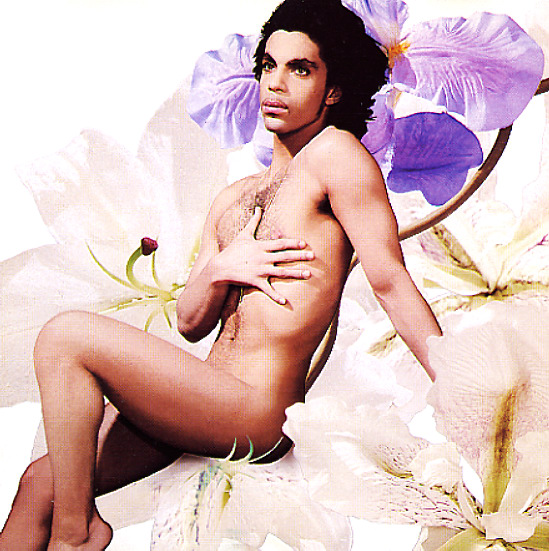
Unfortunately he took it a little to far with Lovesexy, his opus, with the whole CD coming out as a single track. I bought the album and enjoyed it. But I, like many fans, was frustrated that I wasn't allowed to skip around and hear the songs I wanted to hear. DJs didn't like that either, and the album got little radio airplay and was a commercial flop. And people didn't like the cover either.


Which leads into the second part, the sexual message. Prince was seen as a womanizer because of his Chamberlain-esque statistics, but for him it isn't about the power over women. In many cases it's about being wanted and used by women. Toure' explains on p. 83

"His stories were less about 'this is what I'll do to you' than 'this is what I want you to do to me.' That had a way of empowering the women he was speaking about, giving them agency and sexual force, rather than making bodies or conquests."

Prince has many, many songs about this: Little Red Corvette, Darling Nikki, and Raspberry Beret, just to name a few.

And Pince's appeal to the mainstream was not only the sex but the religion. In Prince's world you can fulfill all your sexual desires and still be highly spiritual. This is a theme Toure' revisits throughout the book, but wrapped up so neatly in his conclusion.

"He believed that sex was part of worship and that lust came from God so it can't be wrong. He's interested in both Saturday night and Sunday morning and he's able to move between both and somehow pull them closer together."

And this is definitely a Saturday night/Sunday morning kind of nation. Except for us Jews, who get bagels on Sunday morning. There's got to be divine sexual message in there somewhere, but I digress.

It's not hard to find the baptismal themes in Purple Rain, and 1999 is about the apocalypse. The iconic beginning to Let's Go Crazy starts as a sermon:

"Dearly beloved, we are gathered here today to get through this thing called life."

Prince's appeal crossed race and ethnic lines, it crossed sexual and religious lines, and most importantly he blurred the lines of rock, soul, funk, and gospel in his music. There was something for everyone.

And Toure' was best able to capture it all, because long before he was a politically polarizing host on MSNBC, he was a music writer who named his son Hendrix.